Vision AI in agriculture should be open
Noktura makes OWL, an open-source camera that detects weeds in real-time, and Canopy, the platform where you train it on your own images. Both are built so a grower or a researcher can take them apart, change them and put them back in the field.
What we make
OWL
A field ready camera that retrofits to your sprayer, ATV or robot. On-board AI looks at the ground as you drive and switches up to four solenoids. No mapping pass, no drone, no connection. See the OWL.
Canopy
Where the images your OWL captures land, with their crop, date and location attached. Label what matters, train a model for your own fields, and send it back to the device. See Canopy.
A global community
- 17
- Countries
- 500+
- GitHub stars
Why we built it
The existing approach to agtech development is inefficient. Every company must collect the same data for every new crop, weed and environmental combination. What if we enabled farmers to do it themselves?
Farmers have always been innovators and have always adapted machinery and tools to suit the systems that they know best.
- Open hardware, so the device can be repaired, modified or built from scratch.
- Shared data, so a season of images collected in one paddock can help someone else's model.
Who we are
Noktura ApS is a two-person company in Copenhagen. OWL began as an open-source research project. It has since been built all over the world, and we are building Canopy around it so anyone can put vision AI to work on their own fields.

Guy Coleman
Co-founder, CEO
Guy has over eight years experience in weed science, precision weed control, robotics and machine vision, in regional Australia, Sydney, Texas and now Copenhagen. He developed the OWL during his PhD at the University of Sydney.

Peter Darket
Co-founder
Peter holds a master’s degree in engineering from DTU. He has spent 3 years in management consulting, and 4 years before that at the Danish fintech unicorn Pleo during its growth from 100 to 1,000 employees.
Open by default
The OWL hardware design, the detection code and the build guides are public under the MIT licence, and they always will be. You do not need to buy anything from us to use them. More than 500 people have starred the repository, and four have contributed code back.
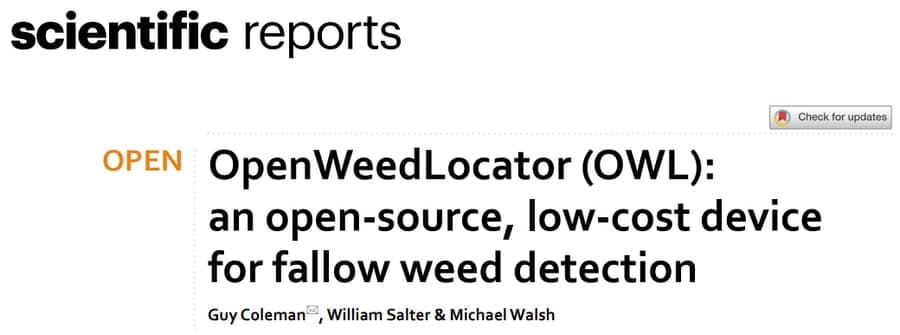
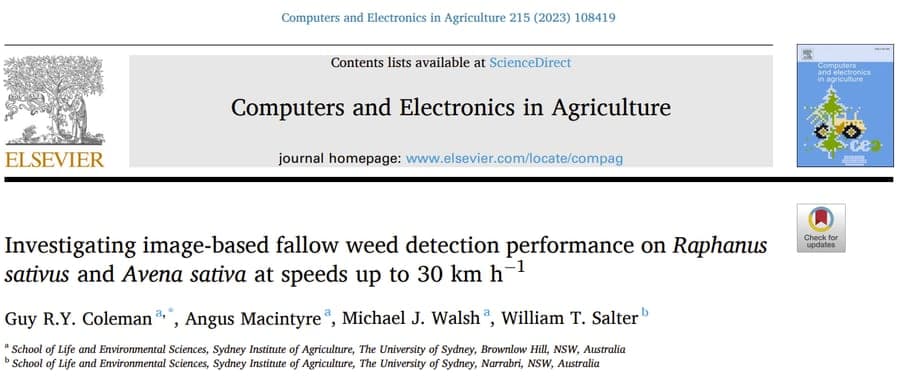
Scientific publications
Covered by
- AUSVEGOWL project update: advancing AI precision weed controlAustralia2025
- evokeAG.Future Young Leader presentation, Perth · talkAustralia2024
- CountrymanWA's Future Young Leader talks up Anzac biscuits and open source tech in agricultureAustralia2024
- Government of Western AustraliaWA innovator named evokeAG 2024 Future Young LeaderAustralia2023
- Future of AgricultureOpen source weed control with Guy Coleman and William Salter of OWL · podcastUnited States2021
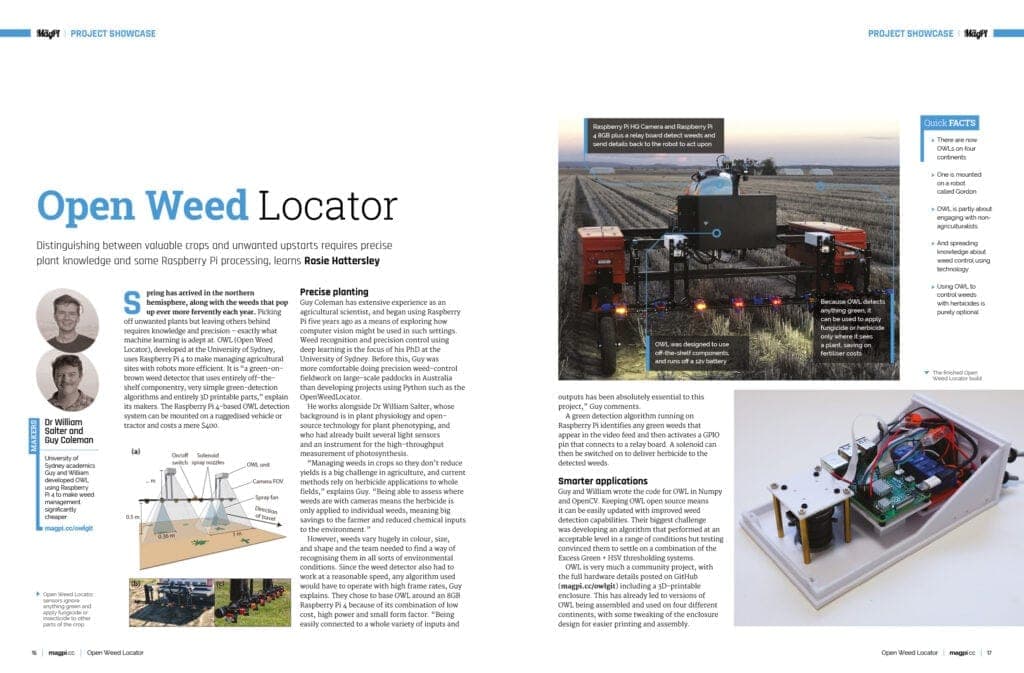
- Raspberry Pi Official MagazineOpen Weed Locator: use AI to detect weeds with Raspberry PiUnited Kingdom2021
Where to start
Growers and agronomists
Put an OWL on what you already drive. Request a quote and we come back with a price for your country and sprayer.
Researchers
Train and share models on your own imagery, and cite the datasets you build on. See Canopy.
Builders
Build your own OWL, change it, and send the improvement back. Start on GitHub.
Everyone else
Press, partnerships and anything else: support@noktura.tech. We are in Copenhagen, Denmark.
Featured in the Raspberry Pi Magazine